NOBLET 9312 Bass Clarinet Modifications
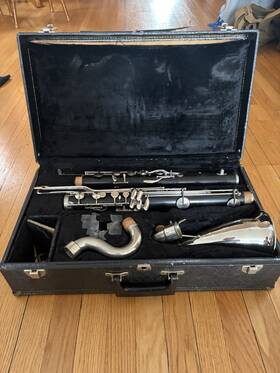
( Brand: Noblet ), ( Manufacturer Part Number: 9312 ), ( Type: Bass Clarinet ), ( Body Material: Plastic, Metal ), ( Color: Black, Silver ), ( Instrument: Clarinet ), ( Set Includes: Case ), ( Key: Bb )
Review NOBLET Bass Clarinet Special Modifications
The **Noblet 9312 Bass Clarinet**, a rare and highly sought-after instrument from the early 20th century, stands as a testament to the craftsmanship and innovation of its era, particularly when subjected to thoughtful modifications that enhance its playability, tonal versatility, and projection. Originally designed as a robust, low-bore instrument with a rich, dark timbre, the 9312 was often favored by orchestral and chamber musicians for its deep, resonant sound and substantial construction, typically featuring a nickel-silver body, ebony keys, and a robust mechanical system. However, its original design with a relatively narrow bore and a more conservative keywork layout can sometimes limit its agility and upper-range articulation compared to modern or heavily modified instruments. Strategic modifications to the 9312 can transform it into a more fluid, responsive, and expressive bass clarinet, bridging the gap between its vintage character and contemporary demands.
One of the most impactful modifications involves **bore enlargement**, particularly in the upper joints, where the original bore may feel constricted, leading to a slightly muffled or strained sound in the mid-to-upper registers. By carefully widening the bore often in the upper bell joint and occasionally the middle joint while maintaining the instrument s original tonehole alignment, the clarinet gains a more open, resonant voice with improved intonation and a smoother transition between registers. This alteration is typically executed by a skilled luthier using precision tools to avoid compromising the instrument s structural integrity, ensuring that the resulting sound remains warm and focused rather than overly bright or nasal. Pairing this with a **modified bell extension**, such as a slightly flared or extended bell, can further enhance projection and harmonic richness, allowing the bass clarinet to cut through dense orchestral textures with greater clarity while retaining its characteristic depth.
For players seeking greater agility and ease of articulation, **keywork adjustments** are essential. The original Noblet 9312 often features a more traditional, less ergonomic key layout, with potential friction points or awkward fingerings that can hinder rapid passages or extended playing sessions. Modifications here might include **repositioning of the register key** for smoother octave jumps, **streamlining the thumb rest** for better hand placement, and **adjusting the tone hole covers** to reduce air leakage and improve response. Additionally, replacing the original **ebony keys** with high-quality synthetic alternatives such as those made from Delrin or other modern materials can reduce maintenance while maintaining a polished, professional feel. Some players also opt for **custom keywork adjustments**, such as adding a **low F# key** or refining the **altissimo register** with auxiliary keys, which can unlock new expressive possibilities in the upper ranges without sacrificing the instrument s original character.
Another critical modification involves the **reed seat and mouthpiece configuration**. The Noblet 9312 s original mouthpiece, often a simple, slightly undercut design, may not provide the optimal balance of response and control for all players. Upgrading to a **custom-made mouthpiece** with a slightly larger bore and a more refined cup shape can dramatically improve the instrument s playability, offering a more even response across the register and reducing the effort required for strong, focused tones. Pairing this with a **modified reed seat** either by enlarging the reed chamber or adjusting the angle of the reed support can further enhance stability and tone production. Some luthiers also recommend **replacing the original cork pads** with modern, high-compression alternatives to ensure a consistent seal and reduce the risk of air leaks during performance.
For orchestral players, the **extension system** is another area where modifications can make a significant difference. The Noblet 9312 s original extension joints may lack the precision and durability required for extended playing sessions, leading to potential intonation shifts or mechanical wear. Upgrading to **modern, precision-machined extensions** with improved key alignment and a more secure connection can eliminate these issues, ensuring consistent performance from the lowest B-flat to the highest notes. Additionally, some players opt for **custom extension joints** with slightly modified lengths to accommodate their playing style, allowing for a more natural hand position and reduced fatigue during long rehearsals or performances.
Finally, the **finishing and aesthetic details** of a modified Noblet 9312 can be refined to reflect both its historical significance and modern functionality. While preserving the original nickel-silver body known for its durability and warm tone some players choose to **polish or replate** the keys and joints for a more professional appearance, ensuring that the instrument not only sounds but also looks its best on stage. Others may opt for **custom engravings or inlays**, adding a personal touch while maintaining the instrument s vintage charm. When combined with these thoughtful modifications, the Noblet 9312 transforms from a classic, slightly limited instrument into a **versatile, responsive, and projection-rich bass clarinet**, capable of excelling in both orchestral and solo contexts while retaining its distinctive character. Whether for a symphony orchestra, a chamber ensemble, or a dedicated soloist, a well-modified 9312 offers a unique blend of history and innovation, proving that even the most traditional instruments can evolve with the right attention to detail.
### Pros and Cons of Buying a Noblet 9312 Bass Clarinet with Modifications
#### **Pros:**1. **Superior Sound Quality** The Noblet 9312 is renowned for its rich, dark, and resonant tone, making it a favorite among professional and advanced players. The modifications can further enhance its projection, clarity, and harmonic richness, particularly in orchestral or chamber settings.
2. **Durability and Craftsmanship** Noblet instruments are built with high-quality materials, including premium woods like grenadilla and ebony, ensuring longevity and resistance to warping or cracking over time. The craftsmanship is precise, contributing to a more stable and reliable instrument.
3. **Versatility** The bass clarinet s range (typically E to F below middle C) makes it suitable for a wide variety of repertoire, from classical to jazz and contemporary music. Modifications can be tailored to suit specific playing styles or genres.
4. **Orchestral and Professional Appeal** Many orchestras and professional ensembles prefer Noblet bass clarinets due to their consistent sound and build quality. Modifications can make it even more competitive in audition settings.
5. **Resale Value** Well-maintained Noblet instruments hold their value well, especially if they retain their original keys and have a clean history. Modifications, if done thoughtfully, can preserve or even increase resale potential.
6. **Customization Options** Modifications allow players to adjust the instrument to their personal preferences, such as adjusting the bore for easier or more powerful playing, modifying the bell for a brighter or darker tone, or adding ergonomic improvements like extended corks or lighter keys.
7. **Historical and Pedagogical Value** Noblet has a long-standing reputation in the woodwind community, dating back to the 19th century. Owning a modified Noblet can be seen as a nod to tradition while still benefiting from modern adjustments.
---
#### **Cons:**1. **High Initial Cost** Noblet bass clarinets are expensive, especially when purchased new or with extensive modifications. Even used models can be costly, and professional modifications (e.g., bore adjustments, bell resizing) add to the expense.
2. **Maintenance Requirements** Wooden instruments require regular care, including conditioning with woodwax or oil to prevent cracking or warping. Neglect can lead to costly repairs or even render the instrument unplayable.
3. **Weight and Ergonomics** The bass clarinet is inherently heavy, and some modifications (like adding metal keys or reinforcing the body) can make it even heavier. This may lead to fatigue during long rehearsals or performances, though some modifications (e.g., lighter keys) can mitigate this.
4. **Potential for Over-Modification** While modifications can improve an instrument, excessive or poorly executed changes (e.g., aggressive bore adjustments, mismatched materials) can degrade sound quality, stability, or playability. It s crucial to work with experienced luthiers.
5. **Limited Availability of Parts** Older Noblet models may have discontinued parts, making repairs or replacements more difficult and expensive. Modifications that alter the instrument s design could further complicate future maintenance.
6. **Learning Curve for Modifications** If you re not familiar with woodwind mechanics, choosing the right modifications can be challenging. Poorly selected changes (e.g., a bell that s too large for your playing style) might not yield the desired results.
7. **Opportunity Cost** The high upfront cost of a modified Noblet could be allocated toward other investments, such as a high-quality mouthpiece, reeds, or additional accessories that might improve your playing without altering the instrument itself.
---
### **Conclusion**
Buying a Noblet 9312 bass clarinet with modifications is a significant investment that can yield exceptional sound quality, durability, and versatility particularly for serious players, professionals, or those in orchestral settings. The modifications can fine-tune the instrument to your preferences, enhancing comfort and performance. However, the high cost, maintenance demands, and potential risks of over-modification must be carefully considered. If you prioritize tone, craftsmanship, and long-term reliability, a modified Noblet is a compelling choice. Conversely, if budget constraints or a preference for modern, lighter designs (e.g., metal clarinets) are priorities, alternatives may be worth exploring.
---
### **Recommendation**
If you are a dedicated bass clarinet player especially at an advanced or professional level consider purchasing a Noblet 9312 with modifications if:
- You have the budget to invest in a high-quality instrument and potential future repairs.
- You value the instrument s historical reputation and sound character.
- You work with a trusted luthian to ensure modifications align with your playing style and the instrument s original integrity.
For beginners or players on a tighter budget, explore alternatives like:- **Used Noblet models** (ensure they are in good condition and have a clean history).
- **Other high-quality brands** (e.g., Buffet Crampon, Yamaha, or Selmer) that offer competitive sound and durability at lower prices.
- **Renting or leasing** to test the instrument before committing to modifications.
Ultimately, the best choice depends on your musical goals, financial situation, and how much you prioritize the Noblet s unique characteristics. If you decide to proceed with modifications, prioritize quality over quantity small, thoughtful adjustments will yield better results than drastic changes.
Details:
The horn has been outfitted by a renowned jazz bass clarinetist to his specific and unique configuration. This is a completely overhauled Noblet bass clarinet in optimal playing condition. The keys have been opened up for maximum volume and the side trill sealed shut to eliminate leaking. Serial number 9312.
This is a special instrument that extremely rare to be up for sale.
part #: 9312 price
- $1800.00
specifications clarinetgeariz:
- brand: Noblet
- mpn: 9312
- type: Bass Clarinet
- body material: Plastic, Metal
- color: Black, Silver
- instrument: Clarinet
- set includes: Case
- key: Bb
offer clarinetgeariz:
- options: Ship-to-home
- quantity: 1
- sold: 0
- started: March 16, 2026
- availability: In Stock
shipping clarinetgeariz:
- class: Standard
- type: Calculated
- cost: $10.21
- carrier: USPS
- transit: 4-10 Days
- service: USPS Ground Advantage
payments clarinetgeariz:
- other
- wallet: Apple-pay
- credit card: Mastercard
returns clarinetgeariz:
- policy: No Returns
general clarinetgeariz:
- condition: Used
- Wind wood wind > Band Orchestral > Clarinets
seller clarinetgeariz:
- city: Chicago, Illinois
- # reviews: 53
- rating: 100.0%
Noblet 9312 Is Similar To:
- 0040000000520 Undisclosed Noblet Paris Model Clarinet Wood (40% similar) ...(January 30th, 2019)
- 0nd00140 Noblet 45 Nd Bb Wood Clarinet (40% similar) Made in France. Used Noblet 45 nd bb wood clarinet. Good working condition...(March 27th, 2016)
- 1156a Leblanc Vintage Noblet Wood Clarinet (34% similar) It is being sold with no reserve. Up for sale is a vintage Leblanc Noblet wood clarinets n 1156A with original hard case lock keys. I am sure it will need some work to get into good condition for playing, new pads, cork replaced, etc. I am not an expert on instruments so selling this as is, ...(February 24th, 2017)
- 11861 Noblet Paris Bass Clarinet (50% similar) It will need some service, repairs and cleaning. This bass clarinet comes as shown clarinet, neck, bell, and case, case has lots of wear but usable...(April 5th, 2017)
- 12870 Noblet Vintage France Wood Bass (27% similar) The neck and bell are in good condition, with a few nicks dings. Dent on bell...(February 17th, 2017)
- Wood Clarinet Noblet 12964 Bass Good Used (34.4% similar) Our ultimate goal is buyer satisfaction. It has been inspected, adjusted and play tested and appears to be in ready to play condition. It comes with a case in fair condition, no mouthpiece and no reeds. There is no lyre holder. This is a used Noblet wood bass clarinet. The pads appear to be original...(January 26th, 2015)
- 12991 Noblet Paris France Bass Clarinet Sn (51.1% similar) Has fine scratches and wear from normal use. Also, the floor peg screw on bell in missing a nut to secure. Does not include mouthpiece, ligature, or floor peg. Includes neck, bell, case, and mouthpiece cap. Please see all photos and ask questions before buying. Used condition. Cork in middle needs ...(March 21st, 2019)
- 1455 Noblet Flat Clarinet Made In Paris Silver Keys Vintage (45% similar) It also comes with a case that is in good shape some wear. It is made of wood and had the pads cork replaced several years ago. The silver needs a good polishing but other than that its in great condition and would be fine instrument for any beginner or experienced musician. This b flat clarinet ...(March 18th, 2019)
- Vito Nice Reso-tone Pro 1517c Paris Clarinet Case Tec 2v Noblet Mouthpiece (38.1% similar) Please inform us prior to the end of the offer...(December 25th, 2014)
- 15866 Noblet Paris France Bass Clarinet Sn (51.1% similar) Includes neck, bell, case, and mouthpiece cap. Has fine scratches and wear from normal use. Good pads and corks. All serial numbers match. Used condition. Does not include mouthpiece, ligature, or floor peg. Keys need to be polished. No cracks or any signs of repair. Please see all photos and ask ...(March 29th, 2019)
- 16834 Stubbins Rarefrance Noblet Clarinet Wh Paris Very (41.1% similar) This item is part of an estate and is sold as is and not returnable. The looks like ebony, Grenadian or rosewood. I am selling item with no reserve a very low starting price...(August 26th, 2015)