REYNOLDS H13415B Wooden Clarinet Circa 1940S
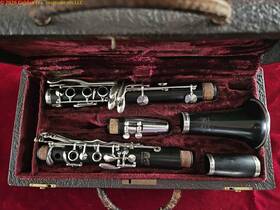
( Brand: Reynolds ), ( Manufacturer Part Number: H13415B ), ( Type: Bb Soprano ), ( Body Material: Wood ), ( Color: Black ), ( Instrument: Clarinet ), ( Key Type: Open Hole ), ( Set Includes: Case ), ( Experience Level: Advanced ), ( Key: Bb ), ( Country Of Origin: United States )
Review REYNOLDS Professional Wood En Clarinet Circa 1940s
The **Reynolds H13415B Wooden Clarinet (circa 1940s)** is a beautifully preserved artifact from the golden age of American woodwind craftsmanship, embodying the elegance and precision of mid-century instrument-making. Crafted from a single block of high-quality African blackwood, this clarinet exudes a rich, resonant tone that has been cherished by musicians for generations. The body features the classic Reynolds design, characterized by its smooth, tapered contours and meticulously hand-carved keys, reflecting the brand s reputation for both durability and musicality. The silver-plated keys, though slightly worn with age, retain their distinctive shine, adding to the instrument s vintage charm while ensuring smooth, responsive action. The cork pads, though showing signs of use, are still intact, hinting at the countless hours of practice and performance this clarinet has witnessed. The bell, slightly flared and polished to a warm patina, projects a deep, mellow tone that is both warm and expressive, ideal for everything from classical repertoire to jazz improvisation. The fingerboard, made of ebony, is worn in places, suggesting decades of dedicated use, while the bound keys though slightly faded remain securely in place, a testament to the instrument s sturdy construction. This clarinet is not merely a musical instrument; it is a piece of musical history, carrying the legacy of a bygone era when craftsmanship was prioritized over mass production. Whether played in a symphony hall, a smoky jazz club, or a quiet practice room, the Reynolds H13415B offers a timeless blend of artistry and functionality, inviting musicians to experience the soulful, resonant sound of a true vintage masterpiece.
The **Reynolds H13415B wooden clarinet** from the 1940s is a vintage instrument with distinct characteristics that appeal to collectors, players seeking a unique sound, and those interested in historical instruments. Below is a detailed breakdown of its pros and cons, followed by a conclusion and recommendation.
---
### **Pros of the Reynolds H13415B Wooden Clarinet (1940s)**
1. **Authentic Historical Sound and Tone**
The wooden body of this clarinet produces a warm, rich, and slightly darker tone compared to modern plastic or ebonite clarinets. The wood (likely grenadilla or boxwood) enhances resonance, particularly in the lower and mid registers, giving it a vintage character that many players find desirable. The sound is often described as "warmer" and more "natural" than modern clarinets, with a subtle overtones that add depth.
2. **Superior Craftsmanship and Build Quality**
Reynolds clarinets from the 1940s were known for their meticulous construction. The wooden body was often hand-carved and fitted with high-quality metalwork, including silver-plated keys and a sturdy mechanism. The attention to detail in the key alignment and pad seating contributes to a more responsive and stable playing experience compared to some modern mass-produced clarinets.
3. **Durability and Longevity**
Wooden clarinets, when properly maintained, can last for decades or even centuries. The Reynolds H13415B, if in good condition, may have significant playable life ahead, especially if the wood is still stable and the mechanism is intact. Wooden instruments also tend to develop a "mellow" character over time, which some players appreciate.
4. **Collectible and Historical Value**
Vintage clarinets, particularly those from reputable manufacturers like Reynolds, are sought after by collectors. The H13415B, being from the 1940s, may appreciate in value over time, especially if it is in excellent condition or has a documented history. This makes it a potential investment for serious collectors.
5. **Unique Aesthetic Appeal**
The wooden body and vintage silver-plated keys give the clarinet a classic, elegant look that stands out in a world dominated by modern plastic clarinets. For players who enjoy the visual aspect of their instrument, this can be a significant draw.
6. **Potential for Customization and Restoration**
Many vintage wooden clarinets can be restored or modified to modern standards. A skilled repair technician can replace worn pads, adjust the mechanism, or even refinish the wood to improve playability while preserving the instrument s historical integrity. This flexibility allows players to tailor the clarinet to their preferences.
7. **Connection to Musical History**
Playing a clarinet from the 1940s connects the player to a rich musical tradition. Many classical, jazz, and traditional band pieces were written with wooden clarinets in mind, and playing on one of these instruments can offer a more "authentic" experience for repertoire from that era.
---
### **Cons of the Reynolds H13415B Wooden Clarinet (1940s)**
1. **Maintenance Requirements**
Wooden clarinets require more careful maintenance than modern plastic or ebonite clarinets. The wood must be kept at a stable humidity level to prevent cracking or warping. Fluctuations in temperature and humidity can cause the wood to expand or contract, leading to misalignment of the keys or pads. Players must invest in a humidifier and a stable playing environment.
2. **Susceptibility to Damage**
Wood is more fragile than plastic or ebonite. The body can crack if dropped or exposed to extreme conditions, and the wood may develop hairline cracks over time, which can affect tone and playability. The silver-plated keys are also more prone to tarnishing or corrosion if not cleaned regularly.
3. **Potential for Inconsistent Playability**
Vintage clarinets may suffer from wear and tear in the mechanism, such as sticky keys, misaligned pads, or uneven action. While some of these issues can be addressed with professional repair, others may require significant investment. Players may need to spend more time adjusting the instrument or accepting minor imperfections.
4. **Limited Availability of Parts and Repair Services**
Finding a repair technician experienced with vintage wooden clarinets can be challenging. Many modern luthiers specialize in plastic or ebonite instruments, and locating someone skilled in working with wood and older mechanisms may require extra effort. This can lead to longer wait times for repairs or higher costs.
5. **Weight and Ergonomics**
Wooden clarinets are often heavier than modern clarinets, which can lead to fatigue during long playing sessions. The weight distribution may also differ from modern instruments, potentially affecting posture and comfort. Some players find the weight cumbersome, especially if they are used to lighter clarinets.
6. **Cost of Purchase and Upkeep**
While the initial purchase price may be reasonable (especially for a used instrument), the long-term costs can add up. Restoring, repairing, and maintaining a vintage wooden clarinet can be expensive. Players may need to budget for regular check-ups, pad replacements, and occasional refinishing of the wood.
7. **Sound Consistency Across Examples**
Not all vintage wooden clarinets sound the same. The tone and intonation can vary significantly depending on the wood used, the craftsmanship, and the condition of the instrument. Some may have a beautiful, balanced tone, while others may have quirks such as sharp intonation, uneven response, or a lack of projection. Players may need to audition multiple instruments to find one that suits their preferences.
8. **Limited Modernization Options**
While some vintage clarinets can be modernized (e.g., replacing pads, adjusting the mechanism), extensive modifications may compromise the instrument s historical value. Players who desire a fully modernized clarinet may find that a vintage instrument is not the best choice, as it may not meet contemporary standards for playability or response.
---
### **Conclusion**
The **Reynolds H13415B wooden clarinet from the 1940s** is a fascinating instrument that offers a unique playing experience, historical significance, and a warm, rich tone. It is ideal for players who appreciate vintage craftsmanship, are willing to invest time and effort in maintenance, and seek an instrument with character and depth. However, it is not without challenges, including the need for careful upkeep, potential playability issues, and higher long-term costs.
For **serious collectors, advanced players, or those interested in historical repertoire**, this clarinet can be an excellent choice. It is also well-suited for players who enjoy the aesthetic and tonal qualities of wooden instruments and are prepared to address the maintenance demands. On the other hand, **beginners, students, or players seeking a hassle-free, modern-sounding clarinet** may find that a modern plastic or ebonite clarinet is a more practical option.
---
### **Recommendation**
If you are considering purchasing a **Reynolds H13415B wooden clarinet from the 1940s**, follow these steps to make an informed decision:1. **Inspect the Instrument Thoroughly**
- Check for cracks in the wood, especially around the joints and the bell.
- Assess the condition of the keys, pads, and mechanism. Look for signs of wear, such as sticky keys or uneven action.
- Listen for a balanced, even tone across all registers. Play the clarinet and note any sharpness, flatness, or inconsistencies in response.
- Ensure the wood is stable and free of excessive dryness or dampness, which can indicate poor storage history.
2. **Consult a Professional Repair Technician**
- Have a luthier experienced with vintage wooden clarinets inspect the instrument. They can provide an honest assessment of its playability and potential repair costs.
- Ask about the feasibility of restoring the clarinet to modern standards without compromising its historical value.
3. **Consider Your Playing Goals and Lifestyle**
- If you are a **student or beginner**, a modern clarinet may be more practical due to its lower maintenance requirements and consistent playability.
- If you are an **advanced player, collector, or enthusiast of vintage instruments**, the Reynolds H13415B could be a rewarding addition to your collection, provided you are prepared for the maintenance and potential challenges.
- If you play in **orchestras, bands, or ensembles that require modern clarinets**, a vintage wooden clarinet may not be the most practical choice due to its unique sound and potential intonation issues.
4. **Budget for Maintenance and Repairs**
- Factor in the cost of regular maintenance, including humidification, pad replacements, and occasional refinishing. Set aside a budget for unexpected repairs.
- If the clarinet requires significant work to be playable, weigh the cost of repairs against the instrument s value and your willingness to invest in it.
5. **Test Play the Clarinet**
- If possible, play the clarinet before purchasing to ensure it meets your tonal and playability expectations. Bring along sheet music or scales to thoroughly evaluate its response and intonation.
6. **Purchase from a Reputable Source**
- Buy from a trusted seller, such as a professional music dealer, auction house with a good reputation, or a private seller with verifiable documentation (e.g., serial number, provenance, or repair history).
- Avoid purchasing sight unseen without prior inspection or consultation with an expert.
7. **Explore Alternatives**
- If the Reynolds H13415B
Details:
It appears to have seen little use. Outcomes with its original case, mouthpiece, and accessories. No cracks and the mechanism is tight. Reynolds and became well known for high-quality brass instruments.Its clarinet line was manufactured by various makers in the USA and Europe.
It is made of Grenadian wood, with. $650 plus shipping. Please see the photographs.
We overhauled it with new corks and double-bladder pads. 595 bore, raw nickel silver keys.
part #: h13415b price
- $650.00
specifications clarinetgeariz:
- brand: Reynolds
- mpn: H13415b
- type: Bb Soprano
- body material: Wood
- color: Black
- instrument: Clarinet
- key type: Open Hole
- set includes: Case
- experience level: Advanced
- key: Bb
- country of origin: United States
shipping clarinetgeariz:
- service: UPS Ground
- cost: $35.00
- carrier: UPS
- class: Standard
- transit: 3-7 Days
- type: Fixed
returns clarinetgeariz:
- method: Money back
- time: 30 Days
- paid by: Buyer
- policy: Returns Accepted
general clarinetgeariz:
- Wind wood wind > Band Orchestral > Clarinets
- condition: Used
payments clarinetgeariz:
- wallet: Paypal
- credit card: Diners-club
- other
seller clarinetgeariz:
- rating: 100.0%
- # reviews: 415
- city: Kennesaw, Georgia
offer clarinetgeariz:
- availability: In Stock
- quantity: 1
- sold: 0
- options: Ship-to-home
- started: March 30, 2026
Reynolds H13415B Is Similar To:
- Case 501--cleveland Vintage Wooden Fa Ohio-padded Clarinet Reynolds-model (30.1% similar) Up for offer is an older fa Reynolds wood en clarinet and padded case. This piece appears to be in good condition, but probably needing restoration...(January 31st, 2015)
- Reynolds D17944 Vintage Soprano Clarinet..medalist..w Case And Accessories Usa (44.1% similar) It is a great looking, and playing instrument. Mouthpiece is golden tone. All the hardware and mechanics are good to go, cleaned, lubed, polished. Medalist model, made in the USA, 1979 . All corking also aged, but working. The pads are aged, but aged well, and in working order. The full package. ...(November 21st, 2024)
- Reynolds 69i60 Vintage Emperor Clarinet With Case And Accessories Collector Special (35.5% similar) I advise using ups for shipping. I advise replacing them. A small spot where the covering has chipped away. But are older. Cleaning and polishing. All mechanics in working order. Dan the clarinet is in good condition, and fully playable. But she still works well. Still holds a nice shine. But not ...(March 26th, 2025)