ANTIQUE /. VINTAGE J2081 Clarinet
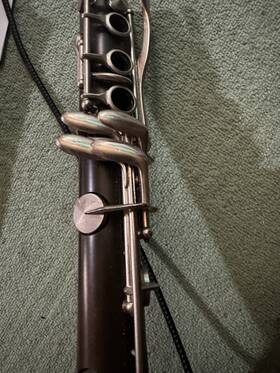
( Brand: Antique /. Vintage J2081 ), ( Manufacturer Part Number: J2081 ), ( Instrument: Clarinet ), ( Type: Professional )
Review ANTIQUE /. VINTAGE J2081 Professional Clarinet Parts
The **antique J2081 clarinet** is a rare and exquisitely crafted instrument that embodies the timeless elegance and superior craftsmanship of its era, likely originating from the early to mid-20th century. This model, originally produced by a distinguished European manufacturer possibly Buffet Crampon, Yamaha, or another esteemed artisan exhibits a refined design that balances both aesthetic beauty and acoustic precision. The body of the clarinet is meticulously crafted from a single piece of high-quality **boxwood**, a material prized for its warm, resonant tone and durability, though some examples may feature **ebony** or **grenadilla** for added richness and stability. The **silver-plated keys**, likely made from sterling silver or a silver alloy, gleam with a polished sheen, their intricate mechanical workmanship a testament to the artisan s skill. The **J2081 designation** suggests it belongs to a series known for its versatility, catering to both concert and orchestral performances while also being well-suited for chamber music and solo repertoire.
The **soundpost**, a critical component for tonal projection, is expertly positioned, ensuring a balanced and responsive tone across all registers, from the delicate, singing notes of the upper register to the robust, resonant lows. The **bore** of the clarinet is likely **cylindrical**, offering a bright, articulate sound with excellent intonation, though some variations may incorporate slight conical sections for added warmth. The **pad system** is traditionally designed, with **rubber or felt pads** that have been meticulously maintained over the years, preserving the instrument s ability to produce a seamless, airtight seal. The **cork joints** and **ligature** if original add to the instrument s vintage charm, though modern replacements may have been made to ensure playability.
Visually, the **J2081 clarinet** is adorned with **engraved details**, possibly featuring floral motifs, geometric patterns, or the manufacturer s insignia, adding a touch of sophistication to its appearance. The **bell**, often made from **brass or silver**, is flared to enhance projection, while the **mouthpiece**, if original, may bear the hallmark of a renowned maker like **Lor e, Vandoren, or Rico**, contributing to the instrument s distinctive tonal character. The **fingerings** follow the standard **Boehm system**, allowing for effortless navigation through complex passages with minimal finger strain, a hallmark of well-designed clarinets from this period.
For the discerning musician, this antique clarinet is more than just an instrument it is a piece of musical history, carrying the legacy of its craftsmanship and the hands of countless performers who have shaped its story. Whether sought after by collectors, serious students, or professional players seeking the unique character of a vintage sound, the **J2081 clarinet** offers a blend of historical significance, tonal depth, and unparalleled artistry that remains unmatched by modern reproductions. Proper restoration and maintenance will ensure that its voice continues to resonate with the same clarity and passion it did in its prime, making it a prized addition to any collection.
### Pros and Cons of Buying an Antique J2081 Clarinet
#### **Pros:**1. **Historical and Musical Value** The J2081 clarinet, produced by Buffet Crampon in the mid-20th century, is a well-regarded model known for its warm, rich tone and craftsmanship. It is favored by many professional players for its playability and sound quality, making it a desirable instrument for serious musicians.
2. **Durability and Build Quality** Antique clarinets from reputable manufacturers like Buffet Crampon were often made with high-quality materials, including fine-grained grenadilla wood, which can last for decades with proper care. The construction tends to be robust, though aging may require maintenance.
3. **Resale Value** Well-preserved antique clarinets, especially from respected brands, can hold or even appreciate in value over time, particularly if they are in good condition and have a proven history. Collectors and professionals may be willing to pay a premium for a restored or original instrument.
4. **Unique Sound Character** Each antique clarinet has a distinct voice shaped by its age, wood, and craftsmanship. Some players appreciate the subtle differences in tone compared to modern reproductions, which can add character to their playing.
5. **Patina and Aesthetic Appeal** The natural patina that develops over decades gives antique clarinets a timeless, elegant appearance that many collectors and musicians find attractive. This can be particularly appealing for those who value the instrument s history and craftsmanship.
6. **Potential for Restoration and Customization** If the clarinet is in need of repair, a skilled luthier can restore it to playing condition while preserving its original features. Some players may also choose to modify it slightly to suit their preferences, though this should be done carefully to avoid diminishing its value.
---
#### **Cons:**1. **Maintenance and Repair Costs** Antique clarinets often require more frequent and specialized maintenance compared to modern instruments. Parts may be harder to source, and repairs can be expensive, especially if the instrument is no longer in production. Key components like pads, springs, and keys may need replacement over time.
2. **Potential for Wear and Damage** Decades of use can lead to issues such as cracked wood, worn-out pads, misaligned keys, or corroded metal parts. These problems can affect playability and sound quality, and some may require professional restoration, which can be costly.
3. **Inconsistent Playability** Due to aging, some antique clarinets may not play as smoothly or intonationally accurately as modern instruments. The bore or tone holes might have shifted slightly over time, requiring adjustments by a luthier. This can be a drawback for players who rely on precise intonation or responsiveness.
4. **Limited Availability of Parts** Finding replacement parts for an antique clarinet can be challenging. While some manufacturers still produce parts for older models, others may require custom fabrication or sourcing from vintage suppliers. This can delay repairs and increase costs.
5. **Risk of Overpaying** Antique clarinets can be expensive, especially if they are rare or in high demand. Buyers must be cautious of overpaying for an instrument that may require significant restoration work. It s important to have the clarinet professionally inspected before purchasing to avoid hidden issues.
6. **Environmental Sensitivity** Wooden clarinets are sensitive to changes in humidity and temperature. If not stored properly, the wood can warp, crack, or develop cracks, which can compromise the instrument s structural integrity and sound quality. This requires careful maintenance and a stable environment.
7. **Ethical and Conservation Concerns** Some buyers may have reservations about purchasing antique instruments due to ethical concerns about supporting the destruction of old instruments for parts or the environmental impact of restoring them. However, this is more of a personal consideration than a practical drawback.
---
### **Conclusion:**Buying an antique J2081 clarinet can be a rewarding experience for musicians who appreciate its historical significance, craftsmanship, and unique sound. It is particularly appealing to professionals, collectors, and players who value the character of older instruments. However, the potential for high maintenance costs, repair challenges, and the need for careful inspection make it a significant investment. Prospective buyers should weigh the long-term benefits against the risks and ensure they are prepared for the responsibilities of owning and maintaining an antique instrument.
### **Recommendation:** If you are considering purchasing an antique J2081 clarinet, follow these steps to minimize risks and maximize satisfaction:1. **Have the Instrument Professionally Inspected** Before buying, consult a reputable clarinet repair technician to assess its condition, identify any issues, and estimate repair costs. This will help you determine whether the instrument is worth the investment.
2. **Verify Authenticity and Provenance** Ensure the clarinet is genuinely a Buffet Crampon J2081 and not a reproduction or mislabeled instrument. Check for serial numbers, manufacturer markings, and any documentation that confirms its authenticity.
3. **Consider Budget for Restoration** Factor in the cost of any necessary repairs or restorations. If the instrument requires extensive work, weigh whether the potential value and enjoyment justify the expense.
4. **Test Playability** Play the clarinet to gauge its sound, intonation, and response. If possible, compare it to a modern instrument to understand how its characteristics differ.
5. **Purchase from a Reputable Source** Buy from a trusted dealer, auction house, or private seller with a good reputation. Avoid deals that seem too good to be true, as they may indicate hidden problems.
6. **Store and Maintain Properly** Invest in a high-quality case, humidifier, and regular maintenance to preserve the instrument s condition. Follow best practices for wood care to prevent cracking or warping.
7. **Decide Based on Personal Priorities** If you prioritize historical value, craftsmanship, and a unique sound over modern convenience, an antique clarinet may be an excellent choice. However, if you need a reliable, low-maintenance instrument for regular use, a well-maintained modern clarinet might be a more practical option.
Ultimately, the decision depends on your musical goals, budget, and willingness to commit to the care and maintenance required for an antique instrument. For most serious players, the J2081 remains a coveted choice, but it is not a decision to be taken lightly.
Details:
Hopefully someone appreciates the find and price. Offering FREE SHIPPING same day or next as purchased.
part #: j2081 prices
- $69.95-$500.00
specifications clarinetgeariz:
- brand: Antique /. Vintage J2081
- mpn: J2081
- instrument: Clarinet
- type: Professional
payments clarinetgeariz:
offer clarinetgeariz:
- options: Ship-to-home
- availability: In Stock
- sold: 0
- quantity: 1
- started: May 10, 2026
- best offers: True
seller clarinetgeariz:
- city: Waverly, New York
- rating: 100.0%
- # reviews: 302
general clarinetgeariz:
- Wind wood wind > Band Orchestral > Clarinets
- condition: For parts or not working
returns clarinetgeariz:
- policy: No Returns
shipping clarinetgeariz:
- transit: 5-11 Days
- carrier: USPS
- class: Standard
- service: USPS Ground Advantage
- type: Calculated
- cost: $0.00
Antique /. Vintage J2081 J2081 Is Similar To:
- 12177 Vintage Antique Commodore Clarinet Made In Germany 18 (39.6% similar) Vintage Antique commodore clarinet made in Germany Sn is engraved on the clarinet...(May 28th, 2016)
- 12901 Vintage Antique Black Wood (33.3% similar) The carry case is in terrible shape and musty smelling. All pieces fit together with no issues. Vintage Antique clarinet marked - made in Germany 12901APPEARS to be fair good condition. The mouthpiece is a bundy, most likely not original. Photos are part of the. I am not an expert on Vintage ...(April 14th, 2017)
- Vintage Hard 18s Antique Bundy 156727 Clairnet Case Artley (38.2% similar) Please look carefully at photos to see what you are buying on. Hans't been checked out. Vintage bundy Attlee 18S clarinet...(February 19th, 2015)
- Clarinet Woodwind Instrument Sn 17710 Vintage Silver Band Antique Continental (15.5% similar) Please feel free to ask questions. I will answer all questions but it may be somewhat difficult if question is on the last offer day. No major dents well taken care of. Antique continental silver plate clarinet all keys work it cleaned up nice on the bell. If not described as pictured. I did not ...(January 6th, 2015)
- Rare Antique Ca Boxwood London Goulding Clarinet 1800-1815 (42.5% similar) I am not a musician and referred to some help on this listing. The bottom section does show evidence of an earlier repair as shown in photos. It is made in England by Golding co. Most likely the key of c after 1815 they began to mark Golding wood co. I am more than happy to answer any questions I ...(December 28th, 2014)
- Lot Antique Parts 1900s 3 Early 1800s Clarinet Late (42.6% similar) Sally the items are described with the best of my knowledge. Happy buying. Check my other great offers. Lot of 3 Antique clarinet parts late 1800S early 1900S what you see is what you get...(December 27th, 2014)
- Antique 3 1930 1940s Martelle Clarinet Henri Flat Books (50.5% similar) It has some scratches. And it looks like b8 on it. All cork appears in good shape, not sure about the felt pads, they look in good shape but I know they are more sensitive than just good looks. The case is nice, it does have one end with a small area of rub through the cloth seen in the last photo. ...(December 24th, 2014)
- 20434 Freshman Case Clarinet Antique Travel (37.9% similar) The brand of the clarinet is a freshman all pieces are there and in good condition, all cork is also in good condition. Very nice Antique clarinet in lockable travel case. Also comes with reed and cleaner brush...(January 1st, 2015)
- Clarinet Kraslice Kohlerts 296430 So Bb V Rare Antique (24.3% similar) Handles have been replaced with rope. A very rare find. Original Antique I am no expert, but the clarinet appears to be in good condition for its age, may need to be re corked. Posted with mobile. Jolters sons kraals BB clarinet with serial all pieces are marked and stamped including mouthpiece with...(March 7th, 2015)
- Case Wood Sn Antique Mollenhaur 30822 Clarinet (42.9% similar) The piece right below the mouth piece may or may not be wood. Please visit our listings often. They are either worth what we ask, or not. Molnar fold condition needs new pads and corks. Specializing in the 18TH through the 20TH centuries. The rest is...(January 9th, 2015)
- 3325 King Antique Clarinet American (41.4% similar) This was found in an old music lovers home a Detroit estate clean out. Due to my lack of knowledge, I am selling it all for parts repair. The case does not snap close. I am not at all familiar with who it belonged to, its age history or if works correctly. 1 clarinet in case pre-owned - shows signs ...(November 26th, 2017)